What is Alpha-1?
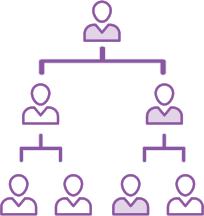
Alpha1 antitrypsin (A1AT) deficiency, or Alpha-1 for short, is a hereditary and progressive condition that affects your lungs. It’s passed down from parent to child through their genes.
Because of this, Alpha-1 lung disease is commonly called "genetic COPD."
Is it COPD, or could you really have Alpha-1?
Although Alpha-1 may look like other serious lung conditions such as COPD, because of overlapping symptoms like wheezing, a cough that won’t go away, or trouble breathing, the root cause of the disease is different.
About 3% of all people diagnosed with COPD may have undetected Alpha-1.


A1AT is a protein that’s produced in your liver before traveling to your lungs through the bloodstream.
People with Alpha-1 have abnormal A1AT that cannot be released from the liver at a normal rate, which leads to a buildup in the liver that can cause liver disease and a lack of A1AT in the blood that can lead to lung disease.

The job of A1AT is to bind neutrophil elastase and prevent it from damaging healthy lung tissue.
People with Alpha-1 don’t have enough A1AT, a protein that helps protect your lungs from inflammation, which can lead to progressive lung damage and emphysema.
Difficult journey to diagnosis


A study showed it took almost 8 years for Alpha-1 patients to receive an accurate diagnosis. Some of those patients were seen by an average of 3 doctors before being successfully diagnosed.
Talk to your doctor about an Alpha-1 diagnosis
Alpha-1 is a progressive disease that can worsen over time and even lead to other serious lung diseases if left untreated. If you suspect that you may have Alpha-1, the power is in your hands to act quickly.
Because the symptoms of Alpha-1 are often identical to other common lung conditions, an accurate diagnosis can only be achieved by taking a blood test.

Ask your doctor about getting tested to help you and possibly your family members get the answers and appropriate treatment you need.

Enroll in ZEMAIRA Connect
Talk to an experienced Case Manager who can help provide information, education, and support throughout your journey.